Supporting Post · CRE Specialization
Most owners who end up with a portfolio of commercial real estate in Eastern North Carolina didn't set out to build one. They started with a single asset — usually the building their business operated from, or a property they bought from a family member, or a land parcel they inherited — and added pieces over time as opportunities came up. The portfolio that results is often a collection of decisions, not a strategy.
That's not necessarily a problem. Plenty of well-performing portfolios were assembled exactly that way. But once an owner gets to three, four, or more properties, the question of whether the mix is doing the right work becomes worth asking deliberately.
We work in three asset classes — commercial, industrial, and land — and each plays a distinct role in a portfolio. Understanding what each one is good at, and what each one isn't, makes it easier to decide what to keep, what to sell, and what to add.
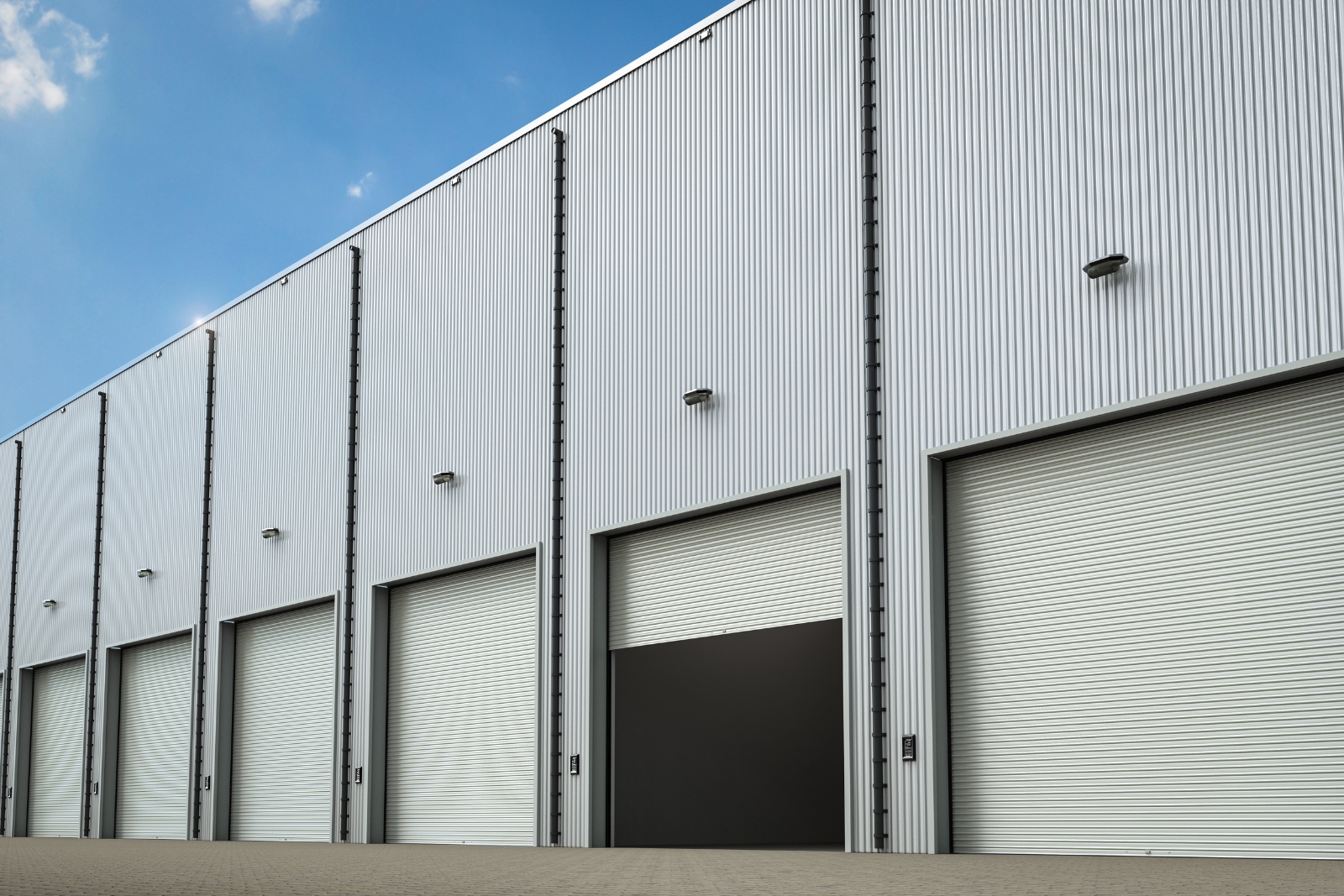
Industrial real estate in Eastern NC — warehouses, distribution facilities, manufacturing buildings, flex space — has been the most reliable income producer in the region's CRE universe over the last decade. The reasons are structural. Tenants tend to be sticky because relocating industrial operations is expensive and disruptive. Lease terms are typically longer than in other commercial categories, often five to ten years with built-in escalations. Build-out costs are lower per square foot, which means turnover is less punishing when it happens.
Cap rates on stabilized industrial in markets like Greenville, Wilson, and along the I-95 corridor have moved with the broader interest rate environment but remain attractive on a basis-adjusted basis for owners who acquired before the recent run-up.
The role industrial plays in a portfolio: durable cash flow, low management intensity, and the kind of credit-tenant exposure that supports leverage. It's the asset class an owner builds around when income stability is the priority.
The risks worth watching: tenant concentration in single-tenant buildings, lease rollover timing on multi-tenant properties, and the long-term obsolescence question on older facilities that don't meet current ceiling height, dock, or power requirements.
"Commercial" is a broad category that, for our purposes, covers office (including medical office), retail, and mixed-use. These assets behave differently from industrial in two important ways. First, they're more sensitive to economic cycles and tenant credit. Second, they offer more opportunity for active management to add value — repositioning, re-tenanting, rent escalations, and physical improvements can all change the asset's profile in ways that's harder to do in a long-leased industrial box.
Medical office in Greenville is a particular sub-category worth highlighting. The presence of ECU and ECU Health creates demand dynamics that more closely resemble institutional medical markets than typical small-metro office. Rents support new construction, tenants are generally credit-strong, and the long-term demographic trajectory supports continued absorption.
Retail in growth corridors — particularly on US-264 toward the coast and on the outer edges of the Greenville and Wilmington metros — has also been a productive sub-category, though retail underwriting requires more attention to tenant mix, traffic counts, and the broader question of which categories are durable in a market increasingly affected by e-commerce.
The role commercial plays in a portfolio: yield with active-management upside, exposure to demographic and demand-driver tailwinds, and a different cash flow rhythm than industrial.
The risks worth watching: tenant concentration, capex needs, and the broader retail/office secular trends that aren't unique to Eastern NC but show up here too.
Land is the asset class that gets misunderstood most often. It doesn't produce income (with rare exceptions like agricultural lease income or solar lease arrangements). It does produce holding cost — taxes, mowing, sometimes financing if leveraged. And it doesn't trade frequently or with deep comparable transaction sets, which makes pricing harder.
What it offers in exchange is leverage to long-duration appreciation that can be substantial when timing aligns. Land in the path of growth — along expanding metro edges, along widening highway corridors, in counties seeing demographic in-migration — appreciates in step changes rather than smooth curves. The acreage that traded for $5,000 an acre fifteen years ago and is now worth $40,000 an acre didn't get there gradually. It got there because development reached it.
Solar and renewable energy demand has added a new layer to the Eastern NC land market. Solar lease arrangements can produce income on land that wouldn't otherwise generate any, and in some cases solar developers acquire land outright. The economics are sub-market-specific and depend on grid interconnection capacity, but the demand has been a real and ongoing factor in land pricing across several Eastern NC counties.
The role land plays in a portfolio: appreciation exposure, optionality (you can develop, hold, sell, or lease as conditions evolve), and a hedge against asset classes that depend on tenant demand.
The risks worth watching: holding cost compounds, timing the entitlement and development cycle is hard, and liquidity to exit on demand isn't there.
A balanced CRE portfolio in Eastern NC typically pairs an income-producing core (industrial and/or stabilized commercial) with one or more growth or value-add positions (commercial repositioning, land in the path of development, opportunistic acquisitions). The exact mix depends on the owner's situation — time horizon, tax position, cash flow needs, family or estate considerations, and whether the owner is operating actively or moving toward more passive holdings.
A few patterns we see often:
Owners with concentrated single-asset exposure to industrial — often the building their business operates from — frequently benefit from adding a commercial or land position to reduce concentration risk and create some appreciation exposure beyond a single tenant.
Owners with retail-heavy commercial exposure sometimes benefit from rebalancing toward industrial, which tends to be more recession-resistant and lower-management.
Owners with significant land holdings sometimes benefit from monetizing a portion through sale or development partnership and using the proceeds to acquire income-producing assets, particularly if holding cost is becoming a meaningful drag.
None of these are universal recommendations. The right answer always depends on the specific situation. But the framework — what role does each asset play, and is the mix doing the work the owner actually needs it to do — is the right place to start the conversation.
Considering whether your CRE portfolio in Eastern NC is positioned the way you'd build it today? A portfolio review surfaces concentration, performance, and rebalancing opportunities you might not be seeing. Schedule a conversation.